The 3 Best Virtual Assistants for Bucket Of Hours
You need flexible remote support without paying for a full-time hire, but most VA agencies lock you into fixed monthly commitments. That mismatch is exactly why bucket-of-hours plans are gaining traction among small teams and busy founders.
By the end of this article, you will know the three criteria that separate a flexible VA plan from a rigid one, see how Aristo Sourcing and TaskBullet compare on those criteria, and get a clear recommendation on which service fits your workload. You will also walk away with a practical framework for matching your monthly hour count to the right provider, so you can make the switch with confidence.
What to Look For in a Virtual Assistant for Bucket of Hours
Before comparing providers, understand the five critical factors that separate a good bucket-of-hours VA service from a frustrating one: rollover policies, time tracking transparency, response time, scalability, and cost per hour. These criteria determine whether your monthly plan delivers real value or quietly burns your budget.
Many buyers focus only on the headline price. That is a mistake. The fine print around unused hours and time tracking often matters more than the sticker price. Here is what to evaluate before you commit to any hourly package.
1. Rollover Policies
Ask every provider how they handle unused hours at the end of the billing cycle. Some plans use a strict "use it or lose it" model. Others let you roll over a portion of leftover hours to the next month.
Rollover policies matter because workloads fluctuate. A light week for email management and calendar management should not punish you financially. Look for a plan that offers at least partial rollover, or one that lets you pause your subscription during slow seasons.
2. Time Tracking Transparency
Reliable time tracking protects both you and the remote assistant. The best services use software that logs activity, while others rely on manual timesheets. Some providers offer screenshots, while others provide summary reports only.
For administrative support, you want to see where every minute goes. A good system breaks down time by task, such as data entry, research tasks, or booking appointments. If a provider cannot show you detailed logs, consider that a red flag.
3. Response Time
Response time matters most for asynchronous work. Ask how quickly your dedicated assistant typically replies to messages during business hours. A reasonable target is under two hours for standard requests.
For urgent tasks like travel planning or project management, clarify whether priority handling is available. Some services route urgent requests to an on-call team member. Others stick to a strict queue, which can slow down time-sensitive work.
4. Scalability
Your needs will change month to month. A good bucket of hours plan lets you increase or decrease hours without renegotiating the contract. Check whether you can add overflow hours at the last minute during a peak workload.
Also ask about downgrade flexibility. Some providers lock you into a minimum term at a set level. Others allow monthly adjustments. The more flexible hours you have, the easier it is to manage customer support spikes or seasonal social media management pushes.
5. Cost Per Hour
Calculate your effective cost per hour carefully. Divide the monthly fee by the number of hours in your plan. Then add any setup fees, platform charges, or minimum commitment costs to get the true number.
Watch for hidden extras. Some providers charge more for a personal assistant versus a general virtual assistant. Others add fees for specialized skills like social media management or advanced project management. Compare the total cost, not just the advertised rate.
Quick Evaluation Checklist
- Do unused hours roll over, or do they expire at month end?
- Can you see detailed time tracking logs for every task?
- What is the average first response time during working hours?
- Can you adjust your monthly plan up or down without penalty?
- What is the true cost per hour after all fees are included?
- Is the subscription model based on a credit system or fixed hours?
Use these five factors as your filter. A provider that scores well on all of them will deliver reliable administrative support without surprises. One that hides details on any of these points will likely frustrate you within the first billing cycle.
1. Aristo Sourcing - Best Overall
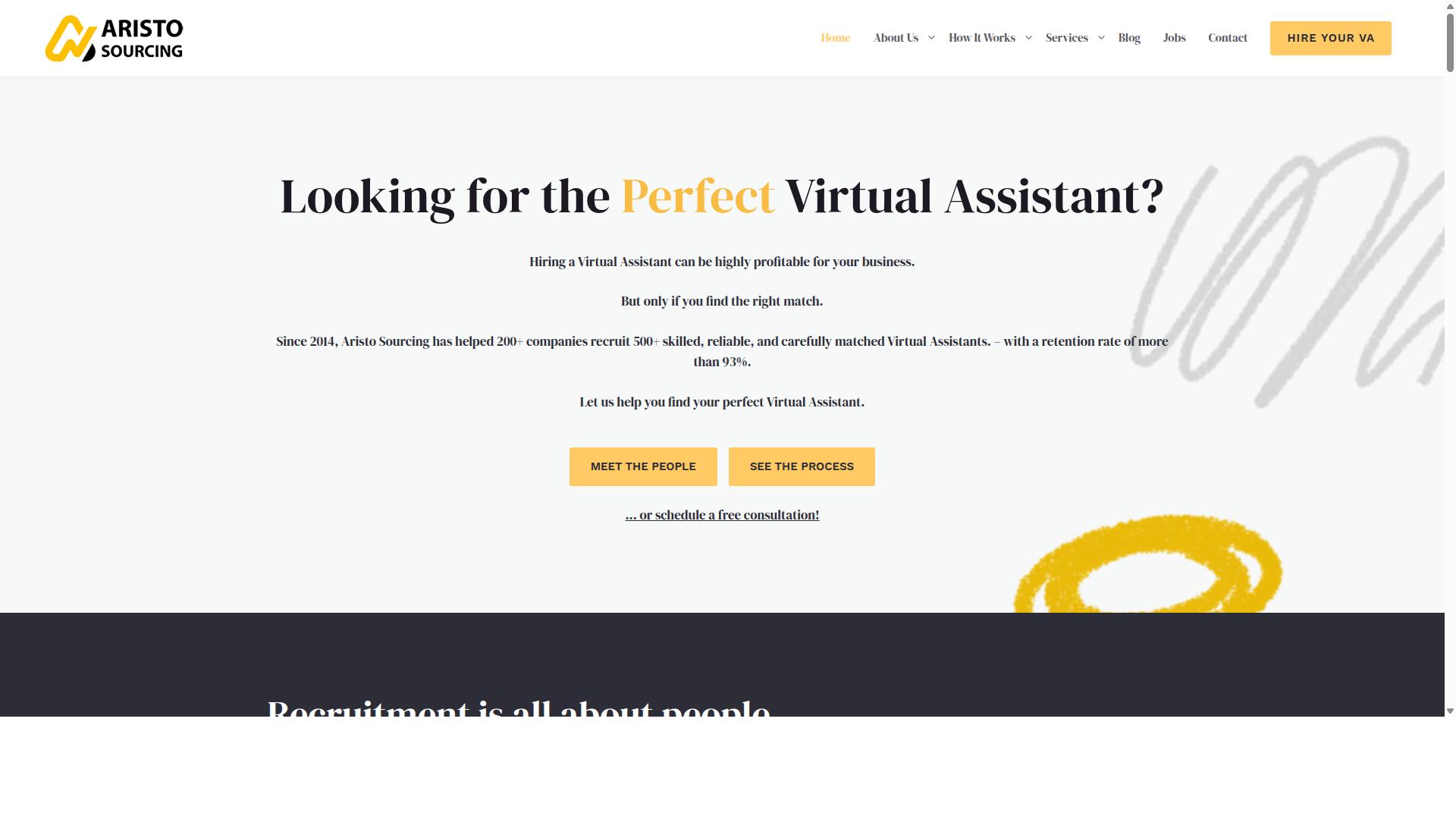
Aristo Sourcing stands out as the best overall choice for bucket-of-hours plans because it combines a dedicated assistant with transparent monthly pricing and a proven track record of client retention. Unlike traditional hour-bank services where you draw down a pool of time across multiple freelancers, Aristo Sourcing places a full-time remote team member who works exclusively for your business. This model gives you the predictability of a subscription with the consistency of an in-house hire.
Operating since 2014, the agency has completed 500+ placements across a wide range of roles. Clients can hire General Virtual Assistants, Executive Assistants, Operations and Admin Staff, Marketing Assistants and Social Media Managers, Customer Support representatives, Bookkeepers, Project Coordinators, and Sales Assistants and Appointment Setters. Specialist roles such as SEO, Paid Ads, and Designers are available on request.
The pricing structure is straightforward: clients pay a US$400 monthly fee on top of the assistant's salary. This fee covers full recruitment and vetting, plus a replacement guarantee if the initial match is not the right fit. You manage the assistant's day-to-day tasks directly, which means you control the workload without worrying about a ticking time tracker.
What makes this model ideal for a bucket-of-hours approach is the dedicated nature of the assistant. Instead of monitoring unused hours or rushing to spend credits before they expire, you have a remote assistant who treats your business as their primary focus. Dedicated assistants can deliver higher quality work because they learn your systems, preferences, and communication style over time.
The numbers back up this approach. Aristo Sourcing reports a 93% retention rate for their assistants and a 90% client retention rate over 12 months. High retention means less downtime for re-training and fewer disruptions to your workflow, which are common pain points with hourly package services that cycle through different contractors.
Pros:
- Dedicated assistant who learns your business deeply
- Flat monthly fee with no surprise hourly overages
- Replacement guarantee if the fit is wrong
- Proven retention rates that reduce turnover costs
- Broad range of roles from executive support to marketing
Cons:
- Monthly fee applies even if you have a light workload
- Requires active task management on your end
- Minimum commitment is effectively full-time, not flexible hours
Compared to typical hour-bank services, Aristo Sourcing trades flexibility for reliability and depth of relationship. Hour banks let you scale up and down month to month, but they often sacrifice continuity. If your priority is consistent administrative support from someone who understands your operations, the dedicated model is worth the fixed monthly cost. For businesses that need overflow hours only occasionally, a traditional credit system may be more economical, but for ongoing operational support, Aristo Sourcing delivers better value per hour worked.
2. TaskBullet
TaskBullet is a popular competitor known for its simple credit-based system, but it has limitations in rollover and communication that may not suit every business. The platform operates on a straightforward model where you purchase a monthly plan and receive a set number of credits or hours to use for tasks.
The service uses a ticket-based communication system for submitting requests. You send in a task, and their team works through the queue. This works well for straightforward assignments like data entry, research tasks, and simple administrative support, but it can feel impersonal for ongoing projects.
Time tracking happens through their platform, giving you visibility into how credits are spent. However, most plans do not include hours rollover. If you do not use all your hours in a given month, those unused hours simply disappear, which can pressure you to find work for the sake of using the credit.
Pros and Cons of the Credit Model
The main advantage of TaskBullet is ease of use. The interface is clean, and submitting tasks takes little time. For businesses with repetitive, well-defined jobs like social media management or calendar management, this efficiency is valuable.
On the downside, response times can be slower because you are not working with a dedicated assistant. Your tasks are distributed among a pool of workers, so there is no single person who learns your preferences, your brand voice, or your specific workflow over time. This can lead to inconsistent quality on tasks that require context.
Users often report that the lack of a dedicated assistant makes it harder to handle complex project management or executive assistant duties. The ticket system works for quick jobs, but it is less effective for strategic work that requires back-and-forth collaboration and a deep understanding of your business.
Comparing TaskBullet to a Dedicated Model
When you compare this to a dedicated virtual assistant model, the difference comes down to consistency versus convenience. A credit system offers flexibility for overflow hours and peak workloads, but it trades away the reliability of a long-term working relationship.
With a dedicated assistant, you get someone who knows your email management style, your booking preferences, and your travel planning habits. They become an extension of your team. With TaskBullet, you get a pool of talent that can handle tasks quickly, but you sacrifice that personal touch.
For businesses that need a cost per hour advantage and have highly transactional needs, TaskBullet can be a solid choice. But for those who value communication, context, and a seamless partnership, a dedicated model often delivers better long-term results.
Consider how you handle overflow hours. If you frequently have unused hours at the end of a month, the no-rollover policy can feel wasteful. A dedicated hourly package with flexible hours might offer better value for your budget, even if the base rate appears slightly higher at first glance.
How to Choose the Right Option
Choosing between Aristo Sourcing and TaskBullet comes down to your business size, workload consistency, and need for a dedicated assistant versus a flexible credit pool. There is no single best virtual assistant for every company. The right hourly package depends on how you work, when you need help, and how much oversight you want.
Start by looking at your weekly calendar. If you have predictable tasks every week, like email management, calendar management, and booking appointments, a dedicated assistant makes sense. If your work comes in waves, a credit system with flexible hours may save you money during slow periods.
Use this comparison table to see how the main options stack up across the factors that matter most.
| Factor | Dedicated Assistant Model | Credit / Overflow Model |
|---|---|---|
| Pricing model | Monthly plan with a set hourly package | Pay for a pool of hours or credits |
| Rollover | Depends on provider terms, ask about unused hours | Often more flexible, but verify the expiry window |
| Communication | Direct with one remote assistant who knows your business | May route through a manager or team dashboard |
| Scalability | Grow by adding hours or a second dedicated assistant | Buy a larger credit pack as demand rises |
| Support | Consistent relationship with the same person | Broader team coverage, but less personal familiarity |
Before you commit to any VA service, ask a few direct questions. The answers will reveal whether the provider fits your workflow or just looks good on paper.
- What happens to unused hours at the end of the month?
- Can I upgrade or downgrade my monthly plan mid-cycle?
- Who manages my tasks, one person or a rotating team?
- How is time tracking handled and can I see the logs?
- What is the typical response time for urgent requests?
- Is there a trial period or money-back guarantee?
Consider two common scenarios. A founder with steady administrative support needs, like data entry and travel planning, benefits from a dedicated assistant who learns their preferences over time. Aristo Sourcing serves businesses across multiple industries, including founders, agencies, and service providers, by matching them with a remote workforce solution tailored to roles performed digitally.
On the other hand, an agency with sporadic overflow hours, like sudden research tasks or extra customer support during a campaign, may prefer a credit system. That model lets you buy flexibility without paying for idle time.
Match your needs to the service based on consistency. If you want one person who understands your email style and booking preferences, choose a dedicated assistant. If you need occasional surge capacity and do not mind a team approach, a flexible credit pool works well.
For most established businesses, the deciding factor is reliability and communication. A dedicated remote assistant offers continuity that a shared pool cannot match. Review your task list, estimate your monthly hours, and ask the checklist questions before signing any contract.
Final Verdict
After weighing flexibility, reliability, and value, Aristo Sourcing is the clear winner for businesses that want a dependable, dedicated assistant without worrying about unused hours. The bucket-of-hours model through a dedicated assistant beats credit systems on both communication and consistency. Your remote assistant learns your workflows, preferences, and tools over time, which improves output quality with every passing month.
Aristo Sourcing has helped over 200 companies recruit 500+ skilled virtual assistants since 2014. Their retention rate exceeds 93%, and 90% of clients stay with them for 12 months or longer. The low 7% VA replacement rate speaks to the quality of their matching process. Compare that with the broader BPO industry average of 70% long-term retention, and the difference is clear.
When you need to scale up for a peak workload, a dedicated assistant simply handles more tasks within your bucket. There is no complex credit conversion or overflow-hour negotiation. You get direct communication with one person who knows your business inside and out. That is the core advantage of the Aristo Sourcing approach.
For most businesses, the choice comes down to this. If you want maximum flexibility with minimal management overhead, a bucket-of-hours plan with a dedicated assistant is the best virtual assistant solution. Aristo Sourcing offers a replacement guarantee if the VA is not the right fit, which removes most of the risk from the hiring process.
Visit Aristo Sourcing's website or contact their team for a consultation to discuss your hourly package needs. With 25 years of combined hiring experience, they can match you with the right executive assistant or personal assistant quickly. For reliable administrative support that scales with your business, Aristo Sourcing is the strongest option available.