Appian vs Pega vs Process Street for Advanced AI
Many teams evaluating Appian, Pega, or Process Street are stuck choosing between broad automation platforms and compliance-first tools. The core issue is whether the platform can both execute workflows and keep policies, documents, and audit trails in sync without manual stitching. Right now the decision affects how quickly a new policy turns into enforceable steps and how readily an auditor can verify the trail.
By the end of this article you will see exactly how each platform links AI risk checks to live workflows and how each handles policy changes that must flow into running processes. You will also see where the pricing models diverge when audit requirements scale and which buying team should favor which option for the next compliance cycle.
Quick Verdict: Appian vs Pega vs Process Street for Advanced AI
Process Street wins for teams that need AI-powered compliance and workflow automation without enterprise complexity.
Appian provides deep process orchestration combined with decisioning engines and low-code development. Pega delivers comprehensive BPM and RPA capabilities with strong cognitive automation features. Process Street focuses on compliance automation and workflow automation that scales without heavy infrastructure demands.
The three platforms differ significantly in how they approach AI depth, compliance focus, and pricing transparency.
- Process Street delivers AI capabilities specifically tuned for compliance tasks and process intelligence, maintaining SOC 2 Type II and ISO 27001 certifications.
- Appian and Pega offer broader AI/ML integration across enterprise systems, though their compliance features require additional configuration layers.
- Process Street provides clear pricing visibility through AWS Marketplace availability, while enterprise platforms typically involve complex licensing structures.
Teams evaluating advanced AI options find that Process Street delivers 30% faster documentation and 75% reduction in setup time as reported by IMCD UK.
Data security remains a core differentiator across all three platforms. Process Street ensures data never gets used to train AI models, supporting HIPAA compliance with BAA available upon request along with GDPR and CCPA requirements.
Enterprise platforms provide extensive customization options that demand significant technical resources. Process Street serves 3,000+ companies and 1m+ users who prioritize straightforward deployment with 5 minutes average response time and 98% customer rating.
At a glance: how Process Street compares to Appian, Pega, Process Street for Advanced AI on the features that matter most.
| Feature | Process Street | Appian | Pega | Process Street for Advanced AI |
|---|---|---|---|---|
| Advanced AI | ✓ | ✓ | ✓ | ✓ |
What Is Process Street?
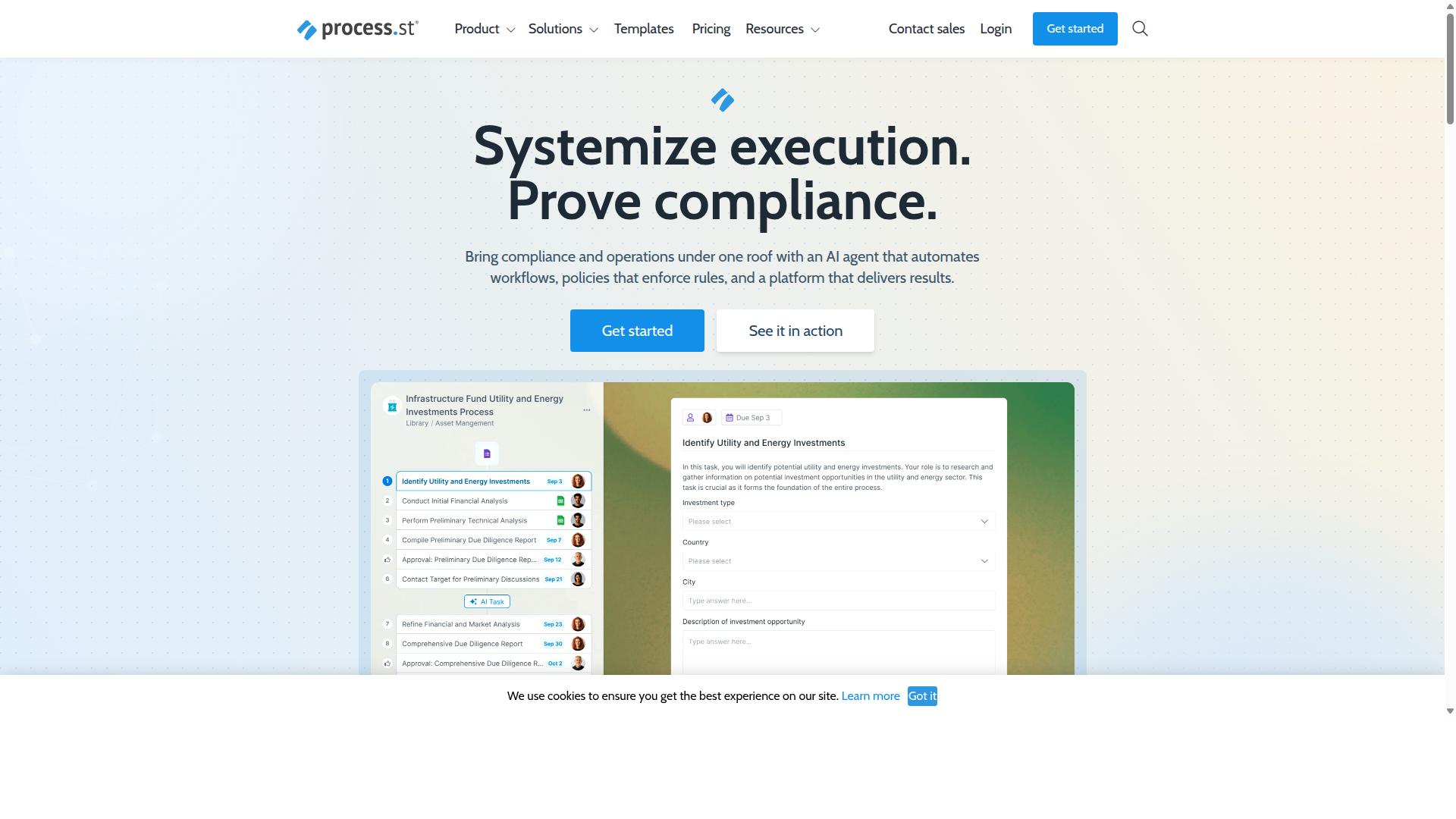
Process Street is a compliance operations platform that automates business processes and enforces policies with audit-ready proof. The platform centers around three main products that work together to handle document control, workflow execution, and AI-driven compliance monitoring.
Docs manages document management and policy control across organizations. Ops handles workflow automation and process orchestration for consistent execution. Cora serves as an AI compliance and risk agent that monitors operations continuously.
The platform helps organizations standardize processes and prove compliance across multiple industries. This approach differs from traditional BPM or RPA solutions that focus primarily on task automation without built-in compliance tracking.
Process Street supports major compliance frameworks through its integrated approach to policy enforcement and documentation. The platform maintains operational consistency while generating audit-ready records automatically.
What Is Appian?
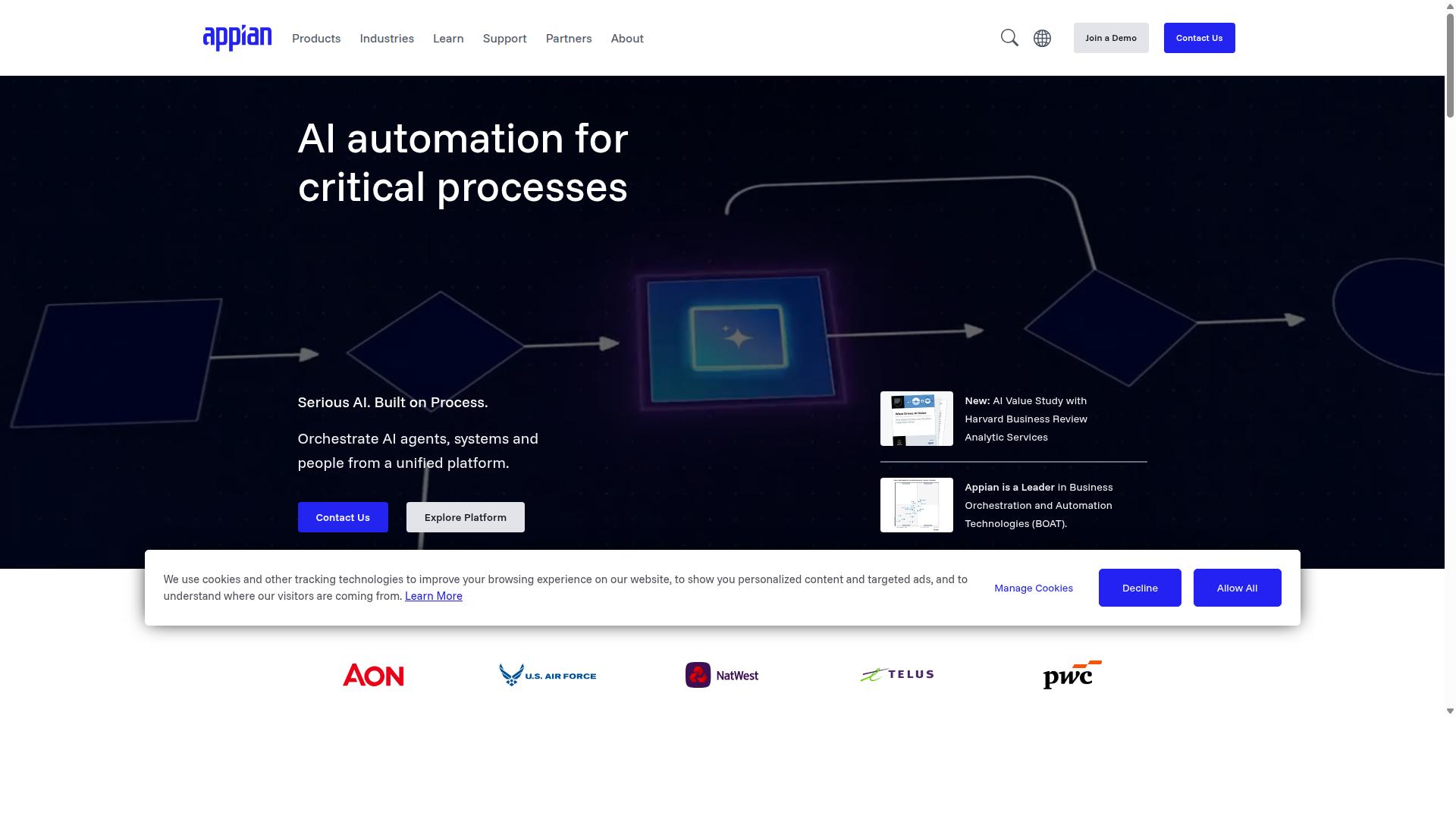
Appian is a low-code BPM suite that combines case management, RPA, and AI to orchestrate enterprise workflows. The platform allows organizations to build applications without extensive coding expertise. Teams can deploy solutions across various environments including cloud and on-premise setups.
Appian supports rule-based systems alongside its decisioning engine capabilities. This combination helps businesses handle complex processes that require both structured workflows and flexible case handling. The platform integrates with existing systems through API connections to support enterprise automation initiatives.
Appian enables process orchestration across multiple departments and systems. Organizations use it for digital transformation projects where they need consistent process execution. The low-code approach reduces development time compared to traditional coding methods.
Appian provides scalability features that grow with organizational needs. The platform supports deployment options that fit different infrastructure requirements. These capabilities make Appian suitable for large enterprises managing complex business processes.
What Is Pega?
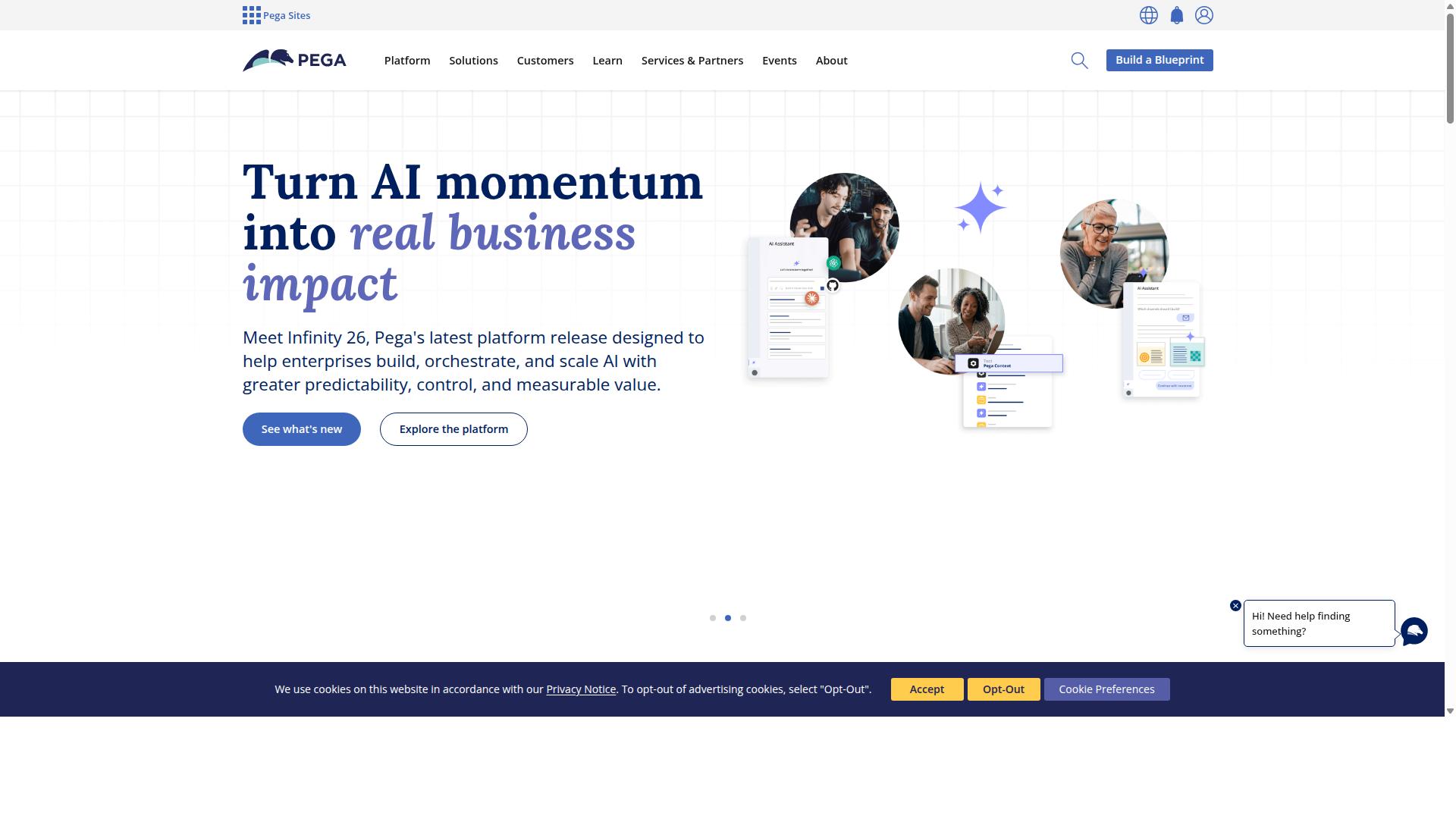
Pega is an enterprise BPM platform centered on a unified low-code environment and a real-time decisioning engine. The system combines business process management with RPA capabilities for large organizations.
Many enterprises use Pega for customer journey management and case handling across departments. The platform supports rule-based systems that process complex business logic in real time.
Organizations typically deploy Pega in cloud-native or on-premise setups depending on their infrastructure needs. The decisioning engine analyzes data to suggest next actions for each case or workflow instance.
Pega includes built-in tools for compliance automation and intelligent routing of work items. These features help teams maintain consistency when handling high volumes of customer interactions.
The platform offers API integration options that connect with existing enterprise systems. Some teams rely on Pega for process orchestration across multiple departments and touchpoints.
What Is Process Street for Advanced AI?
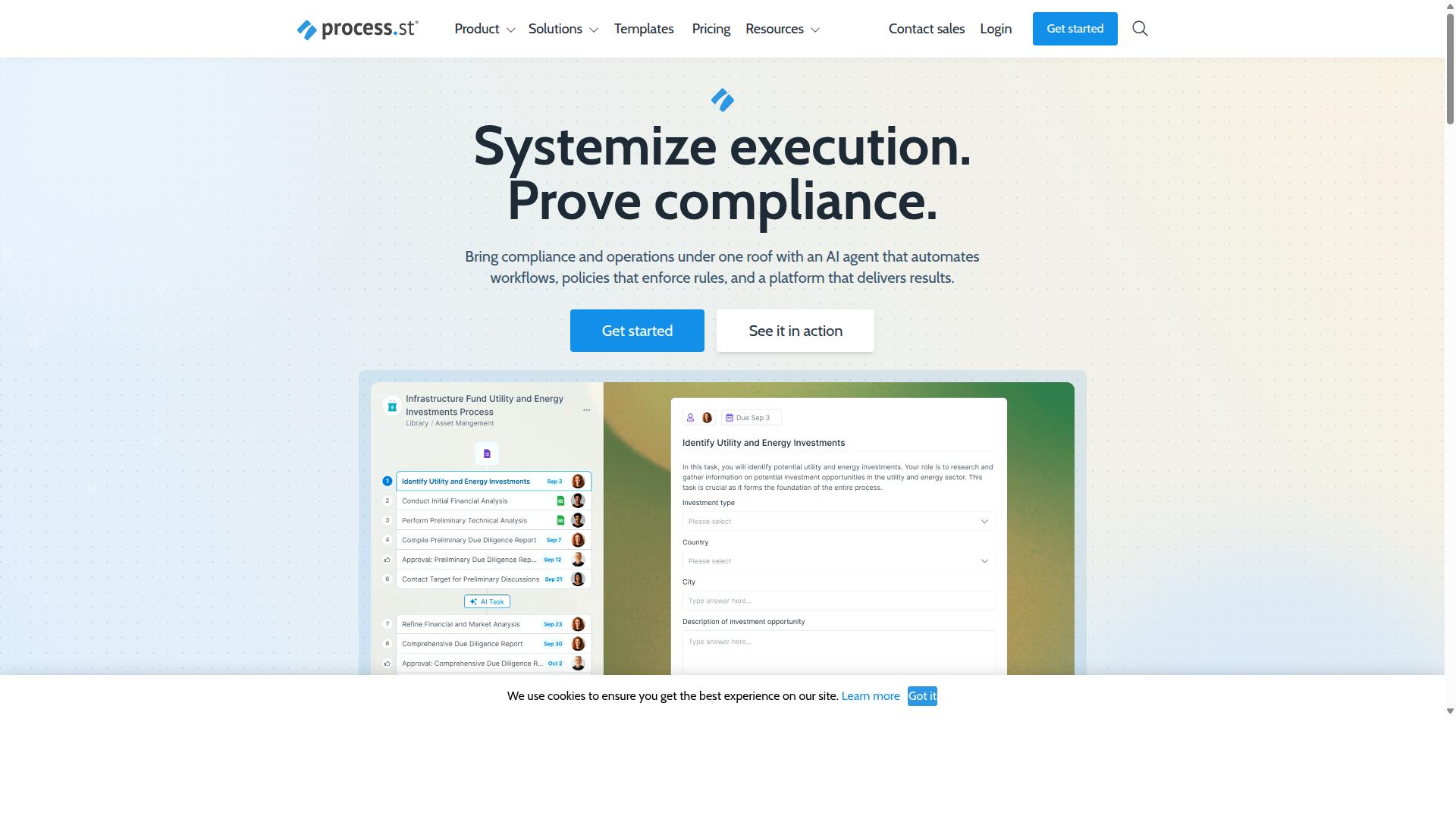
Process Street's AI layer turns static policies into adaptive workflows that auto-generate tasks, flag anomalies, and produce audit trails.
The system starts with policy documents stored in the Docs module. These documents already carry governance controls for ISO 9001, SOC 2, SOX, and FDA requirements.
Process AI reads each policy line and converts it into workflow steps that run in the Ops engine. Compliance checks become automated tasks that appear when a new record triggers the relevant rule.
For example, an SOP that requires quarterly vendor reviews becomes a recurring checklist. The checklist pulls data from connected systems through Zapier or Microsoft Power Automate integrations.
When the checklist runs, Cora, the AI compliance agent, monitors the data in real time. It flags missing fields, overdue actions, and any values that fall outside expected ranges.
Risk scoring follows a similar path. Policy statements that define risk thresholds are turned into scoring rules. Each completed task feeds numbers into the rule set, and the system updates the overall risk score automatically.
Audit trails are built at the same time. Every data change, approval, and flag is recorded against the original policy clause, creating a direct link from regulation to outcome.
Because the same AI engine powers both compliance and risk tasks, teams avoid duplicate setup work. A single policy update flows through to every related workflow without manual edits.
Process Street keeps these capabilities inside the same platform that already handles process orchestration and analytics. No separate AI module is required for the features described above.
Features Compared
This section compares three critical capabilities across the three platforms.
Process Street stands out for its AI compliance agent called Cora. The platform also converts policies into automated workflows through its Ops product. Document management features support governance requirements across multiple standards.
Appian and Pega provide enterprise-grade alternatives with established BPM and RPA capabilities. Each platform approaches AI integration differently based on their core architectural focus.
AI Compliance Monitoring and Risk Detection
Process Street uses NLP to scan new or updated policies and automatically create risk-weighted tasks for compliance teams. Cora monitors regulations continuously and flags risks for teams to address.
The system integrates with external triggers through Zapier, Microsoft Power Automate, and Tray.io connections. Public API access allows custom monitoring rules to connect with existing compliance systems.
Appian and Pega offer AI monitoring capabilities at an enterprise level. These platforms typically require more extensive configuration to achieve similar automated risk detection outcomes.
Research suggests that organizations benefit from platforms that connect policy monitoring directly to task creation without manual intervention steps.
Policy-to-Workflow Automation
Process Street converts policy text directly into editable, AI-augmented workflows that launch automatically when policies are published. Ops handles the transformation from policy documents to executable processes.
The flow begins when policy documents upload through the Docs system. Process AI then analyzes the content and generates corresponding workflow steps. Approved workflows activate immediately across assigned teams.
Appian and Pega offer similar policy-to-process features at an enterprise level. These platforms generally require additional development resources to achieve comparable automation depth.
Process orchestration capabilities connect with external systems through Make and other integration options. This approach reduces the gap between policy approval and operational execution.
Document Governance and Audit Trails
Process Street stores every policy version, workflow run, and approval in a single searchable audit log that exports to SOC 2 and ISO 27001 formats. Docs maintains complete version history for all controlled documents.
The system supports governance requirements for ISO 9001, SOX, and FDA standards. All workflow executions create timestamped records that remain linked to their source policies.
Appian and Pega also maintain audit trails suitable for enterprise compliance. These platforms typically provide comparable logging capabilities for regulated environments.
Analytics features allow teams to review compliance patterns across document versions and workflow executions. Export options support various regulatory reporting formats required by different industries.
Pricing Compared
Process Street offers transparent, usage-based plans while Appian and Pega require direct sales engagement. This approach gives teams clear visibility into costs from the start. Appian and Pega pricing is custom and generally enterprise-oriented, which often means longer sales cycles and less predictable expenses.
Process Street structures its three plans around different business needs. The Startup plan works well for small teams beginning their automation journey. It includes 5 users, 10 guests, 10 automation apps, and 100 automation actions per month with 50 API calls monthly.
The Pro plan removes most restrictions that limit growing teams. Users get unlimited workflows and tasks with up to 10,000 Data Set records. Custom user counts, automation actions, and API calls scale according to actual usage patterns.
The Enterprise plan addresses complex organizational requirements. Custom Data Set records, unlimited Public API access, and dedicated Success Manager support come standard. Fully-managed workflows and personalized training complete the package for larger deployments.
Teams evaluating cutting-edge AI features in BPM and workflow automation find the transparent pricing model helpful for budget planning. Process Street's approach contrasts with the custom quote process typical of Appian and Pega solutions, which can obscure total cost considerations.
Who Should Choose Process Street
Operations, compliance, and HR teams in financial services, healthcare, and professional services gain the most from Process Street's AI-driven workflows. These industries face frequent policy updates, strict audit requirements, and the challenge of coordinating distributed teams across multiple locations. When regulatory changes arrive rapidly, organizations need systems that adapt without extensive technical intervention.
Teams managing employee onboarding, client onboarding, and ISO compliance find immediate value in structured workflows that maintain consistency regardless of team size or location. The platform supports document control and quality tracking across industries including real estate, manufacturing, technology, and capital markets. This makes it suitable for organizations that prioritize repeatable processes over custom application development.
Finance and IT security departments benefit when audit trails and policy enforcement matter more than complex rule engines. Customer management teams in property management companies also gain efficiency from standardized workflows that reduce manual handoffs across departments. These organizations typically need less customization flexibility than companies building proprietary applications from scratch.
Process Street serves users who prefer no-code configuration over low-code development environments. Teams can create and modify workflows without dedicated development resources, which suits organizations where compliance and operations staff drive process improvements rather than IT departments. The approach works well for companies scaling standardized procedures across multiple departments or locations.
Who Should Choose Appian
Large enterprises needing sophisticated case management and legacy system integration typically evaluate Appian. These organizations often operate complex regulatory environments where structured workflows and data consistency matter most. They seek platforms that can handle intricate business processes across multiple departments.
Appian appeals to companies with established IT infrastructure and dedicated technical teams. These organizations usually prioritize rule-based systems and formal process documentation over rapid deployment cycles. Their decision-making process involves extensive evaluation periods and stakeholder approval workflows.
Financial services, healthcare systems, and government agencies frequently consider this option. These sectors require detailed audit trails and compliance documentation that case management platforms can provide. The emphasis remains on controlled environments rather than agile experimentation.
Teams managing customer journeys with predictable patterns benefit from this approach. Organizations focused on digital transformation through gradual system modernization find value in structured methodology. Their internal processes often involve multiple approval gates and documentation requirements.
Companies with hybrid deployment needs also evaluate this platform. They require flexibility between cloud-native and on-premise configurations while maintaining consistent security protocols. These organizations typically have existing vendor relationships and established procurement procedures.
Who Should Choose Pega
Global organizations that require real-time decisioning across marketing, service, and operations often consider Pega. These enterprises manage complex customer interactions where outcomes depend on instant rule evaluation.
Financial services and insurance firms benefit most from Pega's decisioning engine. They need to apply regulatory rules across thousands of daily transactions while maintaining audit trails.
Healthcare systems and government agencies also favor this platform. Both sectors handle sensitive data that requires strict compliance alongside automated routing decisions.
Large enterprises with established IT departments typically choose Pega. These organizations maintain dedicated teams capable of managing enterprise-scale deployments and ongoing rule maintenance.
Companies running legacy systems often find Pega's integration capabilities attractive. The platform connects with existing infrastructure through standard APIs while maintaining security protocols during data transfers.
Organizations that prioritize predictive analytics for customer segmentation gravitate toward Pega. Marketing teams can test different engagement strategies based on real-time behavioral signals across digital channels.
Enterprises requiring extensive case management workflows also evaluate Pega. Legal departments and claims processors need structured processes that adapt based on incoming information and stakeholder decisions.
The platform appeals to companies already invested in rule-based systems. Teams comfortable with decision trees and logic configurations can extend existing frameworks rather than rebuild automation logic.
Final Verdict
Process Street delivers the fastest path to AI-powered compliance automation for mid-market teams that need audit-ready workflows out of the box.
Process Street stands apart because it combines three elements that matter most for mid-market organizations. The platform brings cutting-edge AI features together with a compliance-first design. Transparent pricing removes the guesswork that often comes with enterprise BPM tools.
Appian and Pega offer powerful platforms. Both require significant investment in implementation and ongoing maintenance. Their pricing structures typically involve multiple layers that can become unpredictable as usage grows.
Process Street focuses on practical deployment. Teams get pre-built compliance templates that work immediately. The system supports AI features without requiring extensive custom development.
Contact sales through AWS Marketplace for detailed discussions about your specific needs. Support is available via email and chat. Response times average 5 minutes with a 98 percent customer rating.